- Your Google Business Profile drives roughly a third of map pack rankings — more than any other factor — and Google now quietly demotes profiles that go silent for 30+ days.
- AI search is the new battleground: AI usage for local search jumped from 6% to 45% in a single year, yet more than half the businesses winning the map pack are invisible in AI answers.
- Reviews are both ranking fuel and AI fuel: steady velocity beats sudden bursts, and around 150+ reviews is where AI assistants start recommending you by name.
If your local SEO playbook still looks like it did two years ago, you're optimizing for a version of Google that no longer exists.
The mechanics shifted hard this year. Google now ranks your business as a single connected entity — profile, reviews, website, and real-world behavior evaluated together. AI Overviews answer local questions before anyone clicks. And ChatGPT quietly became the third most popular way people find local businesses, behind only Google and Facebook.
The good news: the businesses actually winning in 2026 are doing a handful of things consistently. None of it requires tricks. This guide walks through all of it — the exact order of operations we'd run for a client, with the numbers behind each step.
What is local SEO in 2026?
Local SEO is the practice of making your business the one Google, Google Maps, and AI assistants recommend when someone nearby searches for what you do. In 2026 it spans three surfaces: the Google Map Pack, traditional organic results, and AI-generated answers — all powered by your business profile, reviews, website, and reputation across the web.
More than 80% of local searches now trigger a map pack, and the businesses inside it get the majority of calls. That part hasn't changed. What's changed is how Google decides who gets in — and the fact that a growing share of your customers never see a results page at all, because an AI answered them directly. (Missing from the map pack entirely? Start with the five most common reasons.)
How local rankings actually work now
Google still describes local ranking with three words: relevance, distance, and prominence. But "prominence" got redefined. It used to lean on brand authority and links; in 2026 it leans on real-world engagement — how often people interact with your profile, request directions, call, click, and review.
The 2026 ranking factor studies break the weighting down roughly like this:
| Signal group | Share of ranking influence |
|---|---|
| Google Business Profile signals | ~32% |
| On-page website signals | ~19% |
| Review signals | ~16% |
| Link signals | ~15% |
| Behavioral signals | ~8% |
| Citation signals | ~7% |
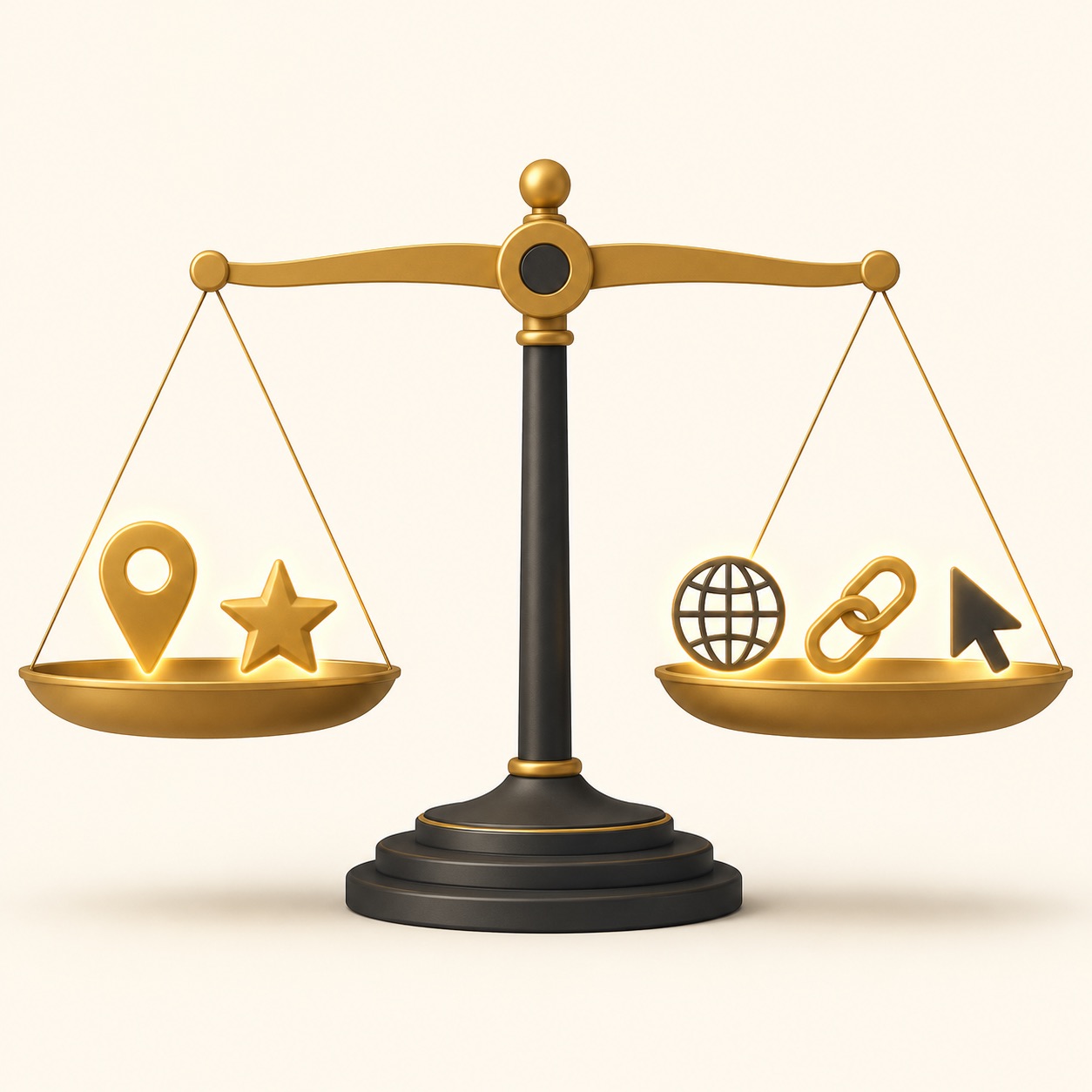
Two things jump out. First, your Google Business Profile alone carries about a third of the entire algorithm. Second, no single signal wins on its own — Google evaluates your business as one entity across all of them.
That entity model has a sharp edge: inconsistency anywhere degrades trust everywhere. A single mismatched phone number across directories can trigger what the industry calls entity fragmentation — Google stops fully trusting your business data, and map pack visibility drops across the board. Keep that in mind as you work through the steps below; half of them are really about making every signal tell the same story.
Step 1: Treat your Google Business Profile as your #1 asset
Most businesses set up their profile once and never touch it again. In 2026, that's fatal — recent updates showed measurable visibility drops for profiles with no new post or photo in over 30 days. Google reads silence as irrelevance. Complete, active profiles are two to three times more likely to appear in the map pack and AI Overviews than incomplete ones.
Here's what actually moves the needle, in order:
Primary category — the single biggest on-profile lever. Switching a law firm's category from "Law firm" to "Personal injury attorney" can change Maps visibility more than any other single edit. Be as specific as the category list allows, matched to what you actually want to sell more of. Then audit your top three map pack competitors: search your main keyword, note their primary categories (tools like GMB Everywhere show this in one click), and make sure you're not competing with a generic category against their specific one. Recheck quarterly — Google adds new categories all the time.
The core four fields. Category, business name, reviews, and photos define the bulk of your profile's ranking power — practitioners estimate these four fields drive 80% of on-profile impact. Get them right before touching anything else. And no, don't stuff keywords into your business name; it works until a competitor reports you, then you're suspended.
Services, listed individually. Google now uses machine learning to auto-populate service lists — don't let it guess. Write every service yourself with a description. Each one is a relevance signal for a query you want.
Real photos, not stock. This one comes straight from the trenches. As one practitioner put it in r/localseo's most-upvoted thread this month: "stop uploading polished stock photos to your GBP — Google's vision AI knows exactly what a stock photo looks like, and it strips away all your local relevance. Take raw smartphone pictures" of your actual team, storefront, and jobs. Aim for 2–4 new real photos a month, geotagged by simply being taken on-site with your phone.
Q&A — seed it yourself. The Questions & Answers section is public real estate almost every business ignores. Post and answer the ten questions customers actually ask (parking, pricing, timelines, service areas). You're writing the answers AI systems and buyers both read.
Weekly activity. A post, a new photo, an answered review, an updated service — something, every week. Fifteen minutes on a Friday is enough. The compounding effect against dormant competitors is real.

Step 2: Build a review engine, not a review count
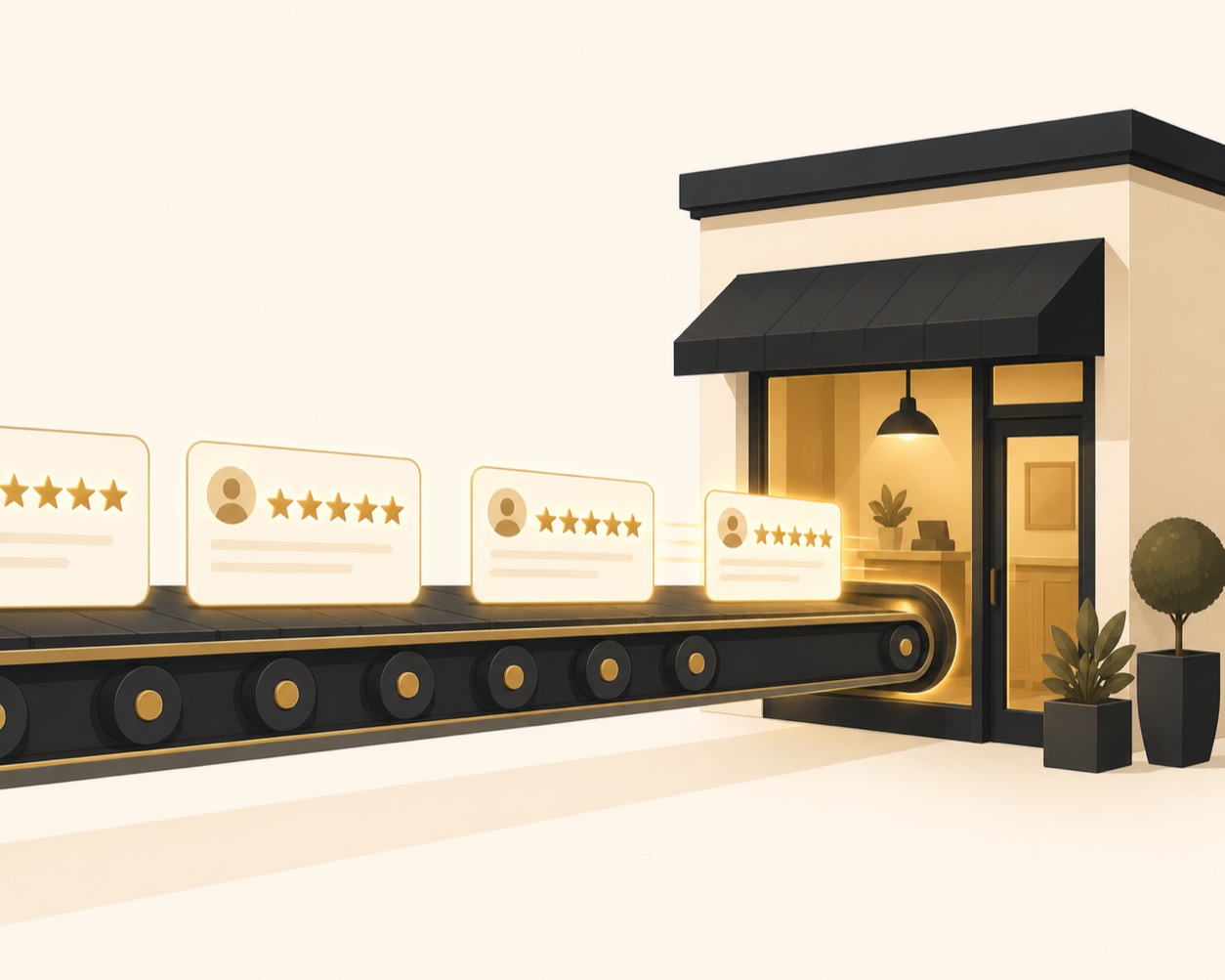
Reviews carry about 16% of ranking weight — but their real influence is bigger, because they feed three systems at once: the map pack algorithm, the conversion decision ("which of these three do I call?"), and now AI recommendations.
The 2026 rules of thumb:
- Velocity beats volume. A steady flow of reviews every month over 90 days outranks a burst of 50 followed by silence. Google reads the pattern, not just the number.
- Aim past 150. Below roughly 150 reviews per location, AI assistants rarely name a business as a recommendation. ChatGPT's picks average 4.3 stars — high, but not perfect, because a wall of flawless 5.0 reviews reads as fake to humans and algorithms alike.
- Reply to every single review. Response rate is a measurable input to AI recommendations, and review content gets pulled directly into AI Overviews. A thoughtful reply is free content in the highest-visibility real estate that exists.
Here's the engine that actually produces those numbers, because "just ask for reviews" isn't a system:
- Pick the moment. Ask when the customer is happiest — job completed, problem solved, compliment given. Not three days later by email blast.
- Make it one tap. Use your Google review short link (find it in your profile under "Ask for reviews") in a text message, or print it as a QR code on invoices and counter cards. Every extra step halves your completion rate.
- Give the ask a script. Something as simple as: "It was great working with you — if you have 60 seconds, a Google review genuinely helps a small business like ours. Here's the direct link." Make sending it part of someone's actual job, not a thing that happens when people remember.
- Reply with substance. Name the service and the neighbourhood naturally in replies ("Glad the furnace install in Kitsilano went smoothly") — you're writing indexable, AI-readable content, not just being polite.
- Handle negatives in public, resolve them in private. A calm, specific reply to a bad review converts more readers than ten 5-star ratings. Never argue; offer the fix and a direct contact.
Step 3: Fix your citations before Google fragments your entity
Every place your business is listed — directories, social profiles, maps apps, your own site — must show the exact same name, address, and phone number. This sounds like 2015 advice. It matters more now, not less, because of entity-based ranking: variations make Google (and every AI assistant cross-referencing your data) less certain you're one coherent business.
The priority list, in order of impact:
- Google Business Profile — the master record everything else must match.
- Your own website — NAP in the footer of every page, matching exactly.
- Apple Maps and Bing Places — chronically ignored, newly important: Apple powers Siri lookups, and Bing's index feeds ChatGPT's live searches. Ten minutes each to claim.
- The big consumer platforms — Yelp, Facebook, and whatever dominates your vertical (TripAdvisor for hospitality, Houzz for home services, Healthgrades for practices).
- Local and industry directories — your chamber of commerce, BBB, trade associations. A handful of quality listings beats 200 junk ones.
The process: pick your one canonical NAP format (decide once: "St." or "Street", suite number placement, phone format), then spend an afternoon fixing every listing to match it, killing duplicates as you find them. After that it's a 30-minute quarterly check. Old addresses and tracking numbers from past marketing agencies are the usual culprits.
Step 4: Make your website prove what your profile claims
Your profile gets you seen; your website convinces both the customer and the algorithms that you're real. On-page signals still carry roughly 19% of local ranking weight, and — this is the part most businesses miss — AI assistants read your website directly when deciding whether to recommend you.
What the winning sites have in common in 2026:
A page per core service and per service area — genuinely useful ones, not thin doorway pages. Fewer, deeper pages now outperform large volumes of fragmented content. A location page that earns its ranking has: the city or neighbourhood in the title tag and H1, a plain-language description of what you do there, real local proof (jobs completed, customer quotes from that area, local landmarks in the copy), an embedded Google map, your NAP, service-specific FAQs, and a visible next step (call button, booking link).
Answer-first structure. Clear headings shaped like real questions, with the direct answer in the first sentence or two underneath. Each section should make complete sense if someone read it alone — because that's literally how AI systems consume it (more on this in Step 5).
LocalBusiness schema markup. Structured data telling machines your name, address, hours, service area, and reviews in their native language. It's an afternoon of work for a developer and it removes all ambiguity about your entity. Add FAQ schema to your question sections while you're at it.
Fast and clean on mobile. No errors, no dead links, quick loading, tap-to-call everywhere. This is table stakes that most local competitors still fail — which makes it free ranking ground.
This is exactly the kind of work we do inside our local SEO service — and if you want to see what a location page should look like, our Vancouver local SEO page is the pattern in the wild.
Step 5: Get recommended by AI — the 2026 land grab
Here's the stat that should reframe your whole strategy: AI usage for local search jumped from 6% to 45% in a single year — and there's only a 45% overlap between businesses winning the Google map pack and businesses AI actually recommends. More than half of map pack winners are invisible in AI answers. Meanwhile only about 1% of locations get recommended by ChatGPT at all. That's not a threat; it's the most open competitive ground local marketing has offered in years.
How AI assistants pick local businesses, in practice:
- They read your website, your Google Business Profile, and big consumer platforms like Yelp — in that order of controllability. ChatGPT's live lookups run on Bing's index, which is why claiming Bing Places (Step 3) quietly matters again. Cross-platform consistency is a direct input.
- They lean heavily on review data — count, rating, recency, response rate, and what the reviews actually say.
- They quote content that answers questions directly. And the research here is specific in ways most businesses haven't caught up to yet.
That third point deserves numbers, because "write good content" is useless advice. Studies of what LLMs actually cite found that pages structured for extraction get cited two to four times more often. The mechanics:
- Write in self-contained sections of roughly 200–400 words, each fully answering one question stated in its heading. AI systems retrieve chunks, not pages — every section is its own lottery ticket.
- Put the answer in the first sentence or two under each heading, then elaborate. Models allocate most of their attention to the first portion of what they retrieve.
- Be fact-dense. Specific names, dates, prices, timeframes, and percentages get quoted; vague marketing language gets skipped. "Most furnace installs in Vancouver run $5,500–$8,000 and take one day" is quotable. "We offer competitive pricing" is invisible.
- Use comparison tables and numbered lists for anything process- or decision-shaped — they're the most extractable formats on the page.
- Length is not the lever. A 174,000-page study found essentially zero correlation (0.04) between word count and AI citations — over half of all cited pages are under 1,000 words. Thin content loses because it's empty, not because it's short.
The practical playbook: mine Google Search Console for the real questions people ask (another top r/localseo tip this month — one practitioner called mining question queries from Search Console the thing that's "been working great for me"), then answer each one in its own dedicated, clearly-structured block. New content can start earning AI citations within 3–5 days; consistent visibility across platforms takes two to four months. Start before your competitors read an article like this one.
The complete AI playbook — including the review thresholds and the Bing connection — is in How to Get Your Business Recommended by ChatGPT. We build it into every campaign as part of our AI search optimization service — the layer most agencies haven't added yet.
Step 6: Be findable everywhere, not just Google
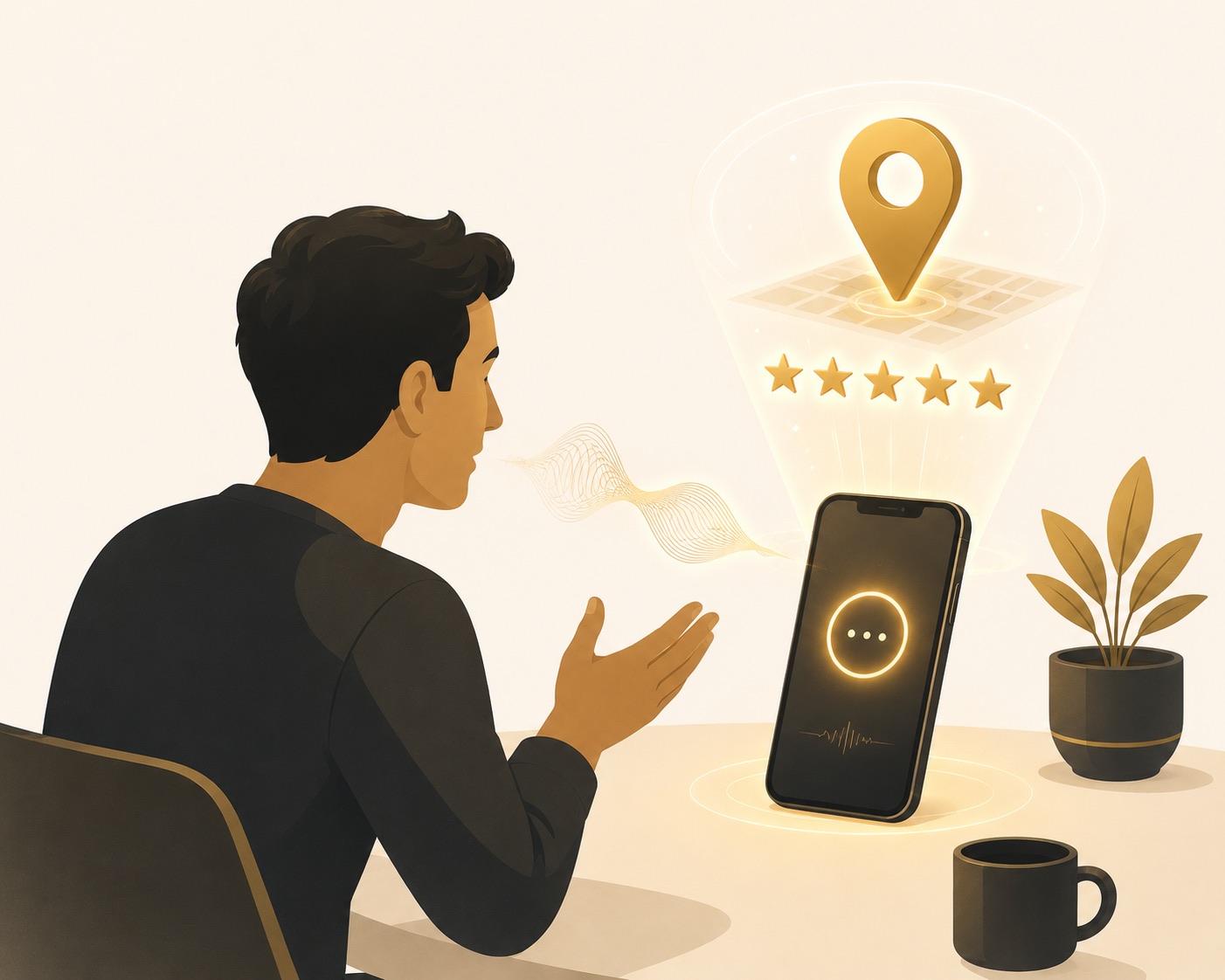
The strongest local strategies in 2026 have shifted from "rank on Google" to what practitioners now call search everywhere optimization. Your customers ask ChatGPT, search TikTok and Instagram for local recommendations, check YouTube for "best X near me" videos, and read Reddit threads about local services. Each platform is a discovery surface — and each one also feeds the AI systems deciding who to recommend.
You don't need to dominate all of them. The quick calibration by business type:
- Visual and lifestyle businesses (restaurants, salons, gyms, trades with before/afters): short-form video on Instagram or TikTok, tagged to your location, once or twice a week.
- High-consideration services (legal, medical, financial, major home renovations): YouTube answers to the questions people research for weeks, plus genuinely helpful participation where your customers ask questions online.
- Everyone: keep your Yelp and vertical-directory presence current, because AI assistants read those even if customers rarely browse them anymore.
Pick one platform, show up consistently for 90 days, and let the cross-platform signals compound. Scattered effort across five platforms loses to focused effort on one.
How do you know it's working? Measure these five things
Local SEO without measurement turns into vibes. The 2026 tracking stack, in order of importance:
- Calls, direction requests, and booking clicks from your Google Business Profile's performance tab — the numbers closest to revenue. Screenshot monthly; trends matter more than any single month.
- Map pack position across your service area, not just from your own desk. Grid-based rank trackers (Local Falcon and similar) show your ranking block-by-block across the city — because ranking #1 next door and #15 across town is the norm, not the exception.
- Search Console queries, especially question-shaped ones — this doubles as your AI-content topic list (Step 5).
- Review velocity: reviews per month, response rate, average rating. The three numbers that feed everything else.
- AI visibility spot-checks: once a month, ask ChatGPT, Gemini, and Perplexity "best [your service] in [your city]" and note who gets named. Crude but revealing — and when you start appearing, you'll know the flywheel caught.
The 7 mistakes we still see every single week
- Set-and-forget profiles — dormant for months, then surprised by the slide. The 30-day decay is real.
- A generic primary category while a specific one exists ("Marketing agency" when "SEO agency" is available — yes, we practice what we preach).
- Stock photography on the profile and website. Google's vision AI discounts it; customers scroll past it.
- Review bursts — 40 reviews in launch week, then nothing for a year. The pattern reads as manipulation.
- Doorway pages — ten near-identical "SEO in [suburb]" pages with the city name swapped. Google's been demoting these for years; AI systems won't quote them either.
- Ignoring Bing and Apple Maps — irrelevant for browsing humans, quietly load-bearing for Siri and ChatGPT.
- Tracking-number chaos — old marketing agencies' call-tracking numbers still scattered across directories, fragmenting the entity. Audit yours today.
Where to start: the 90-day order of operations
Don't try to do all of this at once. (And if you're weighing this work against paid ads, Local SEO vs. Google Ads covers how to sequence both.) This is the sequence we run, and roughly when each layer starts paying off:
- Weeks 1–2: Complete and correct your Google Business Profile. Fix your primary category against a competitor audit. Replace stock photos with real ones. Seed the Q&A.
- Weeks 2–4: Clean up citations everywhere your business is listed — including Apple Maps and Bing Places. Launch your review engine with a one-tap link and a named owner.
- Months 2–3: Build or rebuild your core service and location pages, answer-first, with LocalBusiness schema. Keep the profile active weekly.
- Month 3 and beyond: Layer in AI-visibility content from real Search Console questions, expand to one additional discovery platform, and start the monthly measurement routine.
Most businesses see map pack movement inside 60–90 days of doing just the first two phases properly. The AI layer compounds from there — and right now it's the closest thing to an unfair advantage local SEO has offered in years.
Frequently asked questions
What is the most important local SEO ranking factor in 2026?
Your Google Business Profile. Industry studies put GBP signals at roughly 32% of map pack ranking influence — more than on-page SEO, reviews, or links individually. Within the profile, your primary category, business name, reviews, and photos carry the most weight, and ongoing activity now matters as much as setup.
How long does local SEO take to show results?
For most businesses with the fundamentals fixed, meaningful map pack movement takes 60–90 days. AI visibility moves on a different clock: fresh content can earn AI citations within days, but building consistent visibility across ChatGPT, Gemini, and Google's AI features typically takes two to four months of sustained effort.
Do I really need to optimize for ChatGPT and AI search?
Yes. AI platforms are now the third most popular source of local business recommendations after Google and Facebook, and usage for local searches grew roughly 7.5x in the past year. Ranking well on Google no longer guarantees AI visibility — more than half of map pack winners never get named in AI answers.
How many Google reviews do I need to compete?
There's no magic number for the map pack, but consistency wins: a steady flow of reviews every month outranks a one-time burst followed by silence. For AI visibility the bar is higher — studies show AI assistants rarely name businesses below roughly 150 reviews, and ChatGPT's picks average about 4.3 stars.
Is my website still important if most customers find me on Google Maps?
More than ever. On-page signals still carry roughly a fifth of local ranking weight, your site is what confirms your services and service areas to Google, and AI assistants read your website directly when deciding whether to recommend you. A thin or outdated site quietly caps both your Maps and AI visibility.
How long does content need to be to get quoted by Google AI or ChatGPT?
Length barely matters — a study of 174,000 pages found a near-zero correlation (0.04) between word count and AI citations, and over half of cited pages are under 1,000 words. What gets quoted is structure: self-contained sections of 200–400 words that fully answer one question each, with specific facts and figures.

Founder of LeadLocal SEO, a Vancouver-based local SEO agency helping local businesses top Google Maps, local search and AI results.
More about Michael →We handle all of this for local businesses — every day.
Get a free audit of where you rank on Google Maps, search and AI — and a clear plan to get you to the top.
Book Your Free Discovery Call